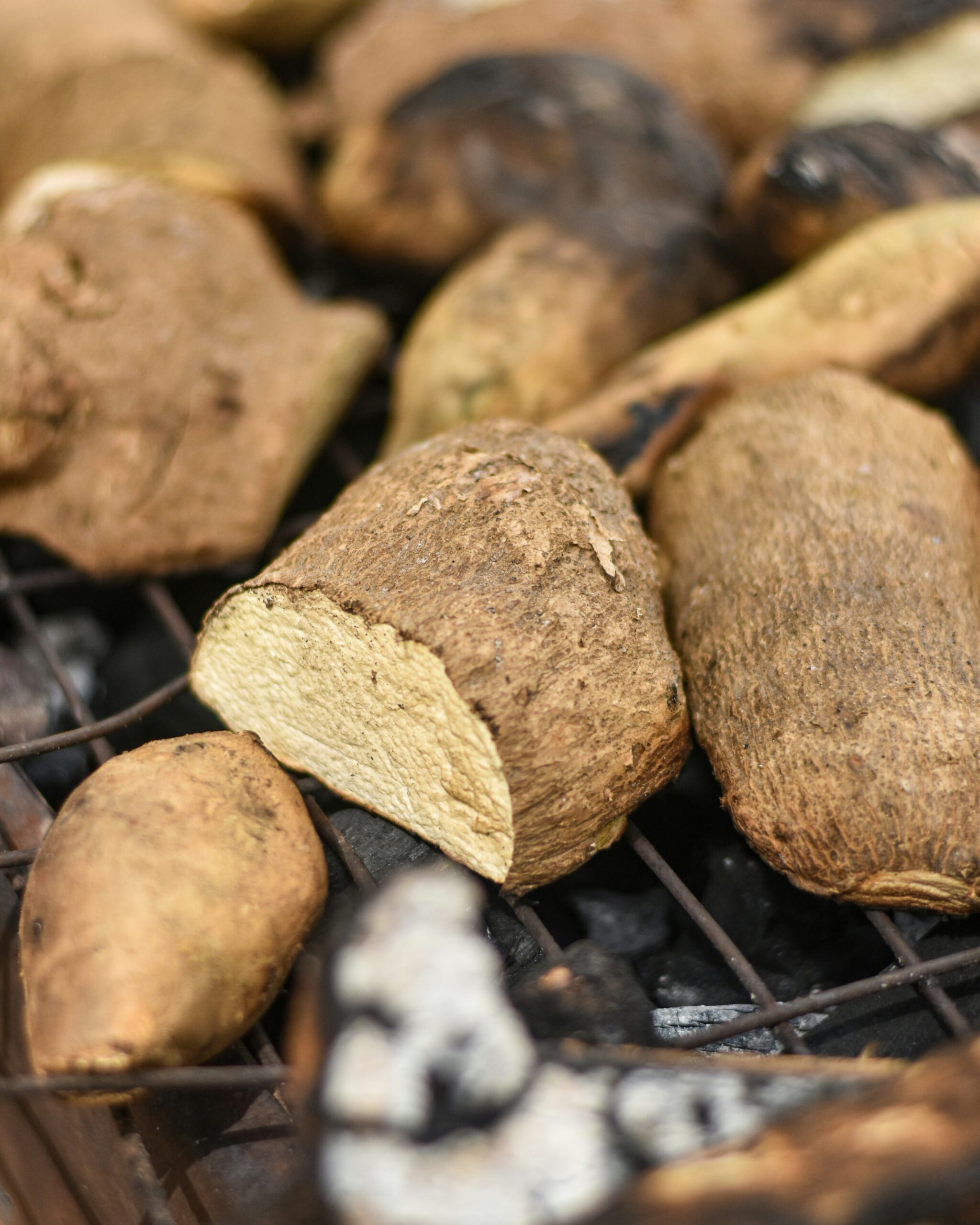
Benue State is widely recognized as one of Nigeria’s leading yam-producing regions, with yam farming playing an important role in the state’s agricultural economy and food supply. From Zaki-Biam to Gboko, Kwande, Vandeikya, Ushongo and other farming communities, yam cultivation remains a major agricultural activity and a source of income for thousands of farmers.
However, achieving a good yam harvest requires more than simply planting yam tubers in the ground. Farmers must understand the right soil conditions, appropriate planting materials, land preparation techniques, planting season, nutrient requirements, weed management and harvesting practices.
Benue sweet yam is particularly valued for its food quality, taste and market demand. With proper agronomic practices, farmers can improve tuber size, increase yield, reduce production losses and maintain good-quality yam for storage and marketing.
Whether you are an experienced yam farmer or planning to establish your first yam farm, this comprehensive guide explains how to cultivate Benue sweet yam successfully, from land preparation to harvesting and storage.
1. Understanding Benue Sweet Yam
Yam belongs to the genus Dioscorea, with white yam (Dioscorea rotundata) being one of the most commonly cultivated species in Nigeria.
Benue sweet yam is a local or market description that may refer to preferred sweet-tasting yam varieties grown and marketed in the state. Farmers should identify the exact variety and obtain healthy planting materials from reliable local producers rather than assuming that every yam sold under this name is the same botanical cultivar.
The crop performs well in areas with adequate rainfall, fertile soil, good drainage and sufficient sunlight.
Yam is also a climbing plant. Its vines require adequate support, particularly where staking is practised to encourage healthy vine development and improve exposure to sunlight.
2. The Best Soil Type for Cultivating Benue Sweet Yam
Soil selection is one of the most important factors determining the growth and productivity of yam.
The best soil for cultivating Benue sweet yam is deep, fertile, well-drained sandy loam or loamy soil with good organic matter content.
Sandy loam is particularly suitable because it provides a favourable environment for tuber development. Its loose structure allows yam tubers to expand without excessive resistance, while its drainage characteristics help prevent waterlogging and tuber rot.
A recent soil evaluation conducted in Zaki-Biam, Benue State, identified sandy loam and clay loam soils among the soil types found on sampled yam farms. The sandy loam locations generally had better porosity, moisture content and organic carbon characteristics.
Although some clay loam soils can support yam cultivation, heavy clay soils should be managed carefully because they can restrict tuber expansion and retain excessive water.
Important soil characteristics for yam cultivation
- Soil texture: Deep sandy loam or well-structured loamy soil.
- Soil fertility: Soil with adequate nitrogen, phosphorus and potassium.
- Organic matter: High organic matter content to improve soil structure and moisture retention.
- Drainage: Good drainage to prevent waterlogging and tuber decay.
- Soil depth: Sufficient depth for unrestricted tuber development.
- Soil pH: Slightly acidic to near-neutral soil is generally suitable.
Avoid planting yam on shallow, stony, compacted or poorly drained land. Such conditions can produce undersized, misshapen tubers and increase the possibility of rotting.
For commercial production, soil testing before planting is advisable because it helps determine the nutrient status of the farmland and the appropriate fertilizer requirements.
3. Land Preparation for Benue Sweet Yam Cultivation
Proper land preparation creates favourable conditions for yam establishment, root development and tuber formation.
Land preparation should begin during the dry season, preferably between January and March, depending on the location and availability of labour.
The following steps are recommended.
Step 1: Select a suitable farmland
Choose farmland with good drainage, adequate sunlight and fertile soil.
Where possible, select land previously under fallow or land that has not been continuously cultivated with yam. Crop rotation helps reduce the accumulation of soil-borne pests and diseases.
Avoid low-lying areas that collect standing water during heavy rainfall.
Step 2: Clear the farmland
Remove bushes, unwanted vegetation, shrubs and other obstacles using cutlasses, hoes or appropriate farm machinery.
Collect large tree roots, stones and other materials that may obstruct tuber development.
Where crop residues are available, they can be composted and later returned to the farmland as organic matter.
Step 3: Remove tree stumps and underground obstacles
Remove large tree stumps and underground roots where necessary.
This is particularly important when preparing farmland for commercial yam production because underground obstacles can restrict tuber expansion and make harvesting difficult.
Step 4: Allow suitable organic materials to decompose
Farm residues such as dry leaves, grasses and other biodegradable materials can be composted before incorporation into the soil.
Avoid placing large quantities of undecomposed plant materials directly around the planting setts because decomposition may be uneven and can interfere with planting operations.
4. Soil Tillage: Mounding and Ridging for Yam Production
Yam requires loose, well-aerated soil for proper tuber development. Soil tillage is therefore an important operation in yam production.
The two major land preparation methods used by yam farmers are mounding and ridging.
A. Mounding
<PRIVATE_PERSON> Mounding is one of the traditional and widely practised methods of yam cultivation in Benue State.
It involves gathering and shaping soil into raised heaps or mounds where individual yam setts are planted.
For good results:
- Prepare mounds approximately 50–100 cm high, depending on soil conditions and local practice.
- Make the mounds sufficiently wide to accommodate tuber development.
- Ensure that the soil is loose and free from large stones.
- Incorporate well-decomposed organic manure into the soil before planting.
- Maintain approximately 1 metre between planting positions as a practical starting arrangement.
Mounding is particularly useful in areas where drainage needs improvement.
B. Ridging
Ridging involves making raised, elongated beds of soil on which yam setts are planted.
This method is suitable for farmers cultivating relatively large areas, especially where mechanised land preparation is available.
The ridges should be sufficiently high and wide to accommodate tuber expansion.
Maintain adequate spacing between ridges to allow easy movement during weeding, fertilizer application and harvesting.
Which method is better?
Both mounding and ridging can produce good results.
Mounding is particularly suitable for traditional smallholder yam production, while ridging can make farm operations more organised and convenient on larger farms.
The choice should depend on soil type, drainage, available labour, farm size and the variety being cultivated.
5. The Best Time to Plant Benue Sweet Yam
The best time to plant Benue sweet yam in Benue State is generally around the beginning of the rainy season, usually between April and May.
However, the precise planting date depends on the location, rainfall pattern, variety and soil moisture.
Areas such as Kwande and Vandeikya may experience different rainfall onset from parts of Makurdi, Guma and Agatu.
Farmers should therefore monitor local rainfall rather than depend entirely on a fixed calendar date.
Why is April and May suitable?
Planting around the onset of consistent rainfall provides sufficient soil moisture for the yam setts to establish and sprout.
Planting too early, when the soil is still excessively dry, can result in poor sprouting and sett deterioration.
Similarly, planting in waterlogged soil can encourage rotting.
Practical recommendation: Prepare your farmland between January and March, but plant when consistent rainfall has begun and the soil has adequate moisture.
6. Selecting the Best Yam Tuber for Planting
The quality of planting materials directly influences crop establishment, plant vigour and eventual tuber yield.
Farmers should select healthy, mature and disease-free yam tubers from productive plants.
Avoid using planting materials with:
- Soft or rotten portions.
- Visible fungal infections.
- Deep mechanical injuries.
- Signs of pest infestation.
- Excessive shrivelling or deterioration.
For good results, purchase seed yams from reliable farmers who maintain healthy planting stocks.
The best part of the yam tuber to use for planting
When cutting a yam tuber into planting pieces, the head portion, also called the proximal end, is generally preferred because it contains the growing region and commonly has more active buds.
The head portion usually sprouts earlier and more vigorously than the middle portion.
However, properly prepared middle and tail portions can also be used for planting if they are healthy and contain viable buds.
For farmers seeking reliable establishment, whole small seed yams or healthy head setts are good options.
Recommended size of yam setts
For conventional yam production, use planting pieces weighing approximately 250–500 grams, depending on the size of the available tubers and the production system.
Each sett should have:
- Healthy, undamaged tissue.
- Adequate stored food reserves.
- At least one viable bud or an area capable of producing a sprout.
Preparation of yam setts before planting
- Select healthy and mature yam tubers.
- Cut the tubers into suitable planting pieces using a clean, sharp knife.
- Give preference to healthy head portions.
- Allow the cut surfaces to dry and form a protective layer in a clean, shaded, well-ventilated environment.
- Where locally recommended, use an appropriate seed-sett treatment to reduce the risk of rotting.
- Plant the prepared setts without unnecessary delay.
Avoid planting freshly cut, excessively wet setts directly into waterlogged soil.
7. How to Plant Benue Sweet Yam
After preparing the farmland, selecting the planting materials and constructing the mounds or ridges, the next operation is planting.
Follow these steps:
- Make a planting hole approximately 15–20 cm deep on the prepared mound or ridge.
- Place one yam sett inside each planting hole.
- Position the sett appropriately, with its sprouting region directed upwards.
- Cover with loose soil.
- Avoid excessive soil compaction around the planting position.
- Maintain approximately 1 metre between planting positions as a general starting spacing.
A spacing of 1 metre by 1 metre gives approximately 10,000 planting stands per hectare.
However, spacing can be adjusted depending on the variety, soil fertility, mound dimensions and the production system.
After planting, dry grass or suitable organic mulch can be applied lightly around the mound to conserve soil moisture and suppress early weed growth.
8. The Best Organic Fertilizer for Benue Sweet Yam
Yam requires adequate nutrients to support vine development, root growth and tuber formation.
Organic manure is particularly valuable because it improves soil structure, increases organic matter content, enhances moisture retention and supplies essential plant nutrients.
The best organic fertilizer options for Benue sweet yam include:
A. Well-composted poultry manure
Well-composted poultry manure is one of the most useful organic fertilizers for yam production.
It contains essential nutrients, particularly nitrogen, phosphorus and potassium, which support vegetative growth and tuber development.
However, fresh poultry manure should not be applied directly to yam setts because it may contain excessive ammonia, generate heat during decomposition and cause damage to planting materials.
Allow poultry manure to decompose properly before application.
B. Well-decomposed cow dung
Cow dung is another good organic fertilizer for yam cultivation.
It improves soil structure, adds organic matter and gradually releases nutrients into the soil.
It is particularly useful for improving the physical properties of sandy soils.
C. Farmyard compost
Farmyard compost made from decomposed leaves, grasses, crop residues and animal manure can also support yam production.
Good-quality compost improves soil fertility and encourages beneficial soil microbial activity.
Which organic fertilizer should farmers choose?
For farmers who have access to poultry manure, properly composted poultry manure is an excellent option because of its nutrient content.
However, the best choice depends on availability, cost, maturity of the manure and soil fertility.
A combination of mature compost and well-decomposed animal manure can also be beneficial.
9. Method of Applying Organic Fertilizer to Yam
Correct fertilizer application is just as important as selecting the right fertilizer.
For yam production, organic manure should preferably be incorporated into the soil during mound or ridge preparation.
Recommended application method
Step 1: Prepare the organic manure
Ensure that the poultry manure, cow dung or compost is fully decomposed and does not produce excessive heat or a strong ammonia smell.
Step 2: Apply the manure to the mound
As a practical starting point, apply approximately 1–2 kg of mature organic manure per planting mound, adjusting the quantity according to manure quality and soil fertility.
This is a general field recommendation, not a universal nutrient prescription.
Step 3: Mix the manure with the soil
Thoroughly mix the manure with the upper soil layer of the mound or ridge.
Avoid concentrating manure in direct contact with the yam sett.
Step 4: Allow the manure to settle
Where possible, incorporate the manure before planting so that it becomes properly distributed throughout the soil.
Step 5: Monitor crop development
Observe the growth of the yam vines and overall crop performance throughout the growing season.
Where soil tests indicate additional nutrient requirements, farmers can obtain advice on supplementary fertilizer application.
Important fertilizer management advice
Do not apply excessive nitrogen fertilizer because it may encourage excessive vine development at the expense of balanced tuber production.
Balanced nutrient management is important for obtaining good-quality yam tubers.
10. Weed Control in Benue Sweet Yam Farming
Weed control is one of the most important management operations in yam production.
Weeds compete with yam plants for sunlight, nutrients, water and growing space.
During the early stages of development, yam plants are particularly vulnerable to weed competition because their vines and leaves have not fully developed.
Uncontrolled weeds can reduce crop establishment, delay development and ultimately decrease tuber yield.
Methods of weed control
A. Manual weeding
Manual weeding using hoes and cutlasses is widely practised by smallholder yam farmers.
It involves removing weeds around the mounds, between ridges and along the farm pathways.
The first weeding should be done early enough to prevent weeds from becoming established.
Subsequent weeding should be carried out according to the level of weed infestation.
Avoid digging too deeply around established yam plants because the operation may damage developing roots and tubers.
B. Mulching
Mulching is an effective method of suppressing weed growth.
Dry grasses, crop residues and other suitable organic materials can be spread around the mounds.
Benefits of mulching include:
- Suppression of weed germination.
- Conservation of soil moisture.
- Reduction of soil temperature fluctuations.
- Addition of organic matter as the materials decompose.
- Reduction of soil erosion.
Ensure that mulch does not remain excessively wet around the yam planting position.
C. Chemical weed control
Herbicides may be considered for large-scale yam production where manual weeding is expensive or labour is limited.
However, farmers should use only herbicides registered for the intended crop and application situation.
Always follow the manufacturer’s label instructions, application rates, timing and safety precautions.
Avoid indiscriminate herbicide application because some products can damage yam plants.
When should yam farmers weed their farms?
The farm should be kept relatively weed-free throughout the growing season, with particular attention during early crop establishment.
Carry out regular inspections and weed whenever necessary rather than waiting until the weeds have grown excessively.
11. Staking and Training of Yam Vines
Yam is a climbing crop, and proper vine management is important for healthy plant development.
Staking provides support for yam vines, allowing them to climb and access sunlight.
Farmers can use bamboo sticks, strong wooden stakes or other locally available materials.
How to stake yam plants
- Provide suitable stakes when the yam vines begin to emerge and require support.
- Insert strong stakes into the soil without damaging the developing tubers.
- Guide the vines gently towards the stakes.
- Regularly inspect the plants and redirect vines that are falling or spreading along the ground.
Where appropriate, farmers can use a shared staking arrangement to reduce the cost of individual stakes.
The International Institute of Tropical Agriculture (IITA) recommends staking at approximately one month after planting in its yam trial management guidelines, depending on sprouting and crop development.
12. Other Important Management Practices
Apart from fertilizer application, staking and weed control, farmers should observe the following practices.
Earthing-up
Heavy rainfall can wash soil away from yam mounds and expose developing roots and tubers.
Farmers should restore washed-away soil by earthing up the mounds.
This helps maintain adequate soil coverage and supports proper tuber development.
Pest and disease monitoring
Inspect yam plants regularly for signs of:
- Yam anthracnose.
- Leaf spot diseases.
- Yam beetles.
- Termites.
- Nematode damage.
- Tuber rotting.
Use healthy planting materials, practise crop rotation and maintain good field hygiene to reduce pest and disease problems.
Remove severely diseased plant materials where appropriate and seek advice from agricultural extension officers when unusual symptoms occur.
Water management
Yam requires sufficient moisture during active growth and tuber development.
However, excessive soil moisture and waterlogging can encourage tuber rot.
Maintain adequate drainage, especially during periods of heavy rainfall.
13. When Is Benue Sweet Yam Ready for Harvesting?
The harvesting period depends on the variety, planting date, climatic conditions and crop management practices.
Many traditional yam varieties mature approximately 8–10 months after planting, although some varieties may mature earlier or later.
For example, yam planted in April or May may be ready for harvesting between December and February, depending on its maturity period.
Signs that yam is ready for harvesting
Farmers should observe the following maturity indicators:
- The yam vines and leaves begin to turn yellow.
- The leaves gradually dry and wither.
- The vines begin to die back naturally.
- The tubers have attained the expected maturity and marketable size.
Natural vine senescence is an important indication of maturity, although farmers should also consider the characteristics of the particular variety.
Avoid harvesting immature yam unnecessarily because it may have poor eating quality and reduced storage potential.
14. The Best Method of Harvesting Benue Sweet Yam
Harvesting is a delicate operation because yam tubers can easily sustain mechanical injuries.
Damaged tubers are more susceptible to microbial infection and storage losses.
The best harvesting method is careful manual harvesting using hoes, digging forks or other suitable farm tools.
Step-by-step harvesting procedure
Step 1: Clear the area around the yam plant
Remove weeds and dry vines around the mound to create sufficient working space.
Step 2: Locate the yam tuber
Identify the position of the tuber before digging.
Avoid striking the mound aggressively with a hoe.
Step 3: Remove the surrounding soil
Carefully dig around the mound, gradually exposing the yam tuber.
Step 4: Lift the tuber gently
Use your hands or suitable farm tools to remove the tuber without breaking or cutting it.
Step 5: Separate healthy tubers from damaged ones
Inspect the harvested tubers and separate those with cuts, bruises, rot or pest damage.
Step 6: Allow the harvested yam to dry under suitable conditions
Keep harvested tubers in a shaded, well-ventilated area to allow surface moisture to dry.
Avoid exposing them to intense sunlight for prolonged periods.
Important: Do not throw yam tubers onto the ground or pile them carelessly during harvesting. Mechanical injuries can significantly reduce their storage life.
15. How to Store Benue Sweet Yam After Harvesting
Proper yam storage is essential for maintaining tuber quality, reducing post-harvest losses and ensuring that farmers can sell their produce when market prices are favourable.
Yam is a living storage organ and continues to respire after harvesting. Poor storage conditions can encourage sprouting, dehydration, pest infestation and microbial deterioration.
The following storage methods are recommended.
A. Traditional yam barn storage
<PRIVATE_PERSON> The traditional yam barn is one of the most common methods of storing yam in Benue State.
It involves arranging harvested yam tubers on wooden supports or structures in a well-ventilated location.
For effective storage:
- Construct the barn in a dry and well-drained location.
- Provide adequate ventilation.
- Arrange tubers carefully to prevent bruising.
- Keep the storage structure protected from excessive rainfall.
- Inspect stored tubers regularly.
- Remove rotten or damaged tubers immediately.
Avoid overcrowding because restricted airflow can increase the risk of deterioration.
B. Storage in a well-ventilated room
Small-scale farmers can store yam in a clean, dry and well-ventilated room.
Arrange the tubers on wooden shelves or raised platforms rather than placing them directly on a damp floor.
Ensure that the storage environment is protected from excessive heat and direct sunlight.
C. Improved yam storage facilities
Commercial yam farmers can invest in improved storage structures designed to regulate ventilation, temperature and humidity.
These facilities can help reduce storage losses when properly managed.
Important precautions during yam storage
- Store only healthy and mature tubers.
- Avoid storing severely bruised or cut yam with healthy tubers.
- Do not wash harvested yam before storage.
- Avoid direct exposure to rain and excessive moisture.
- Inspect the stored tubers regularly.
- Remove rotting tubers immediately to prevent the spread of deterioration.
Proper handling during harvesting and storage can significantly improve the quantity of marketable yam available to farmers.
16. Common Mistakes to Avoid When Cultivating Benue Sweet Yam
Even when farmers use good planting materials, certain mistakes can reduce productivity.
Some common mistakes include:
- Planting yam on waterlogged farmland.
- Using diseased or poor-quality planting materials.
- Planting freshly cut setts in excessively wet soil.
- Failing to prepare adequate mounds or ridges.
- Planting without considering the onset of rainfall.
- Applying fresh poultry manure directly to planting materials.
- Allowing weeds to compete with yam during early growth.
- Neglecting staking and vine management where required.
- Applying excessive nitrogen fertilizer.
- Harvesting before the tubers are mature.
- Injuring tubers during harvesting.
- Storing yam in damp, poorly ventilated environments.
Avoiding these mistakes can improve crop establishment, tuber quality and overall farm profitability.
17. Practical Yam Production Calendar for Benue State
The following calendar provides a general guide for traditional yam production in Benue State. Actual operations should be adjusted according to rainfall onset, variety and local conditions.
| Period | Farm operation |
|---|---|
| January–February | Land selection, bush clearing and initial preparation |
| March | Soil tillage, mound and ridge preparation, compost incorporation |
| April–May | Planting of healthy yam setts as consistent rains begin |
| May–June | Sprouting, early weed control and staking |
| June–August | Regular weeding, vine training and crop monitoring |
| August–October | Tuber development, earthing-up and pest monitoring |
| November–January | Maturity assessment and harvesting, depending on variety |
| December–February | Continued harvesting and proper storage |
Conclusion
Cultivating Benue sweet yam successfully requires proper planning, suitable planting materials and consistent farm management.
The most important factors include selecting deep, fertile and well-drained soil, preparing adequate mounds or ridges, planting healthy yam setts at the appropriate time, using well-composted organic manure, controlling weeds and harvesting at physiological maturity.
Farmers should also pay attention to proper staking, drainage, pest management and careful storage to minimise post-harvest losses.
With the adoption of these improved agronomic practices, yam farmers in Benue State can improve productivity, obtain better-quality tubers and increase their income from yam production.
Yam cultivation remains a valuable agricultural enterprise, and applying the right production techniques can make Benue sweet yam farming more productive and commercially rewarding.
Frequently Asked Questions (FAQs)
1. What is the best soil for cultivating Benue sweet yam?
Deep, fertile, well-drained sandy loam soil with adequate organic matter is generally the best soil for cultivating Benue sweet yam.
2. What is the best month to plant yam in Benue State?
April and May are generally suitable planting months, depending on the onset of consistent rainfall in the farming location.
3. Which part of the yam tuber is best for planting?
The head or proximal portion is generally preferred because it commonly contains more active buds and sprouts vigorously. Healthy middle and tail setts can also be planted.
4. What is the best organic fertilizer for yam cultivation?
Well-composted poultry manure is an excellent organic fertilizer for yam because it supplies essential nutrients and improves soil fertility. Well-decomposed cow dung and mature farmyard compost are also suitable alternatives.
5. How much organic manure should I apply per yam mound?
Approximately 1–2 kg of mature organic manure per mound can serve as a practical starting point. The quantity should be adjusted according to manure quality and soil fertility.
6. How many months does yam take to mature?
Many traditional yam varieties take approximately 8–10 months to mature, although the actual period depends on the variety and growing conditions.
7. How do you know when yam is ready for harvesting?
Yellowing and natural drying of leaves and vines are important indicators that yam is approaching maturity. Farmers should also consider the expected maturity period of the variety.
8. What is the best method of storing yam?
A well-ventilated yam barn is a traditional and effective storage option. Healthy tubers should be handled carefully and stored in a dry environment with good airflow.
9. Can poultry manure be applied directly to yam setts?
No. Fresh poultry manure should not be placed directly against yam setts. It should first be properly composted and mixed with the soil before planting.
10. What is the recommended spacing for yam cultivation?
A spacing of approximately 1 metre by 1 metre is a useful starting recommendation, giving about 10,000 planting stands per hectare. The arrangement can be adjusted to suit the variety and production system.
References and Further Reading
The following resources provide additional scientific and agronomic information on yam cultivation:
- International Institute of Tropical Agriculture (IITA) – Standard Operating Procedure for Yam Trial Management.
- Journal of Scientific Agriculture – Evaluation of Soil Health Characteristics Suitable for Yam Cultivation in Zaki-Biam, Benue State, Nigeria.
- National Root Crops Research Institute (NRCRI), Umudike.
- Tropical Agriculture Platform – Climate-Smart and Market-Preferred Yam Varieties.
- National Agricultural Extension and Research Liaison Services (NAERLS).